Sustained transport requires aircraft, energy support and operational planning to work together. We study next-generation logistics platforms, corridor energy support and intelligent operations as parts of one system from the outset.
The frontier research directions are at different stages of concept development, model analysis and validation planning. The sections below outline the research focus of each direction, together with current work and next steps.
The following are research directions and conceptual illustrations. Practical use will depend on further research and validation.
On this page3 sections
01Next-generation Logistics Aircraft
Balancing node operations, cruise efficiency and cargo turnaround.
Why We Study ItAn aircraft for a logistics corridor has to take off and land at nodes often, cruise efficiently along routes, and hand over cargo automatically for repeated turnaround. Added one by one late in design, these requirements tend to conflict, so they are considered together from the overall design stage.
Takeoff, Landing & Cruise CoordinationConsider node takeoff and landing together with route cruising requirements and flight efficiency.
Automated Handoff & Repeated TurnaroundDesign receiving, release and repeated transport together with node handling and turnaround.
Energy-needs CoordinationConsider flight missions, energy requirements and node conditions together at the system-design stage.
Corridor Operations CoordinationAddress planning, takeoff and landing interfaces, and ground connections as one operating problem.
Concept illustrationConcept illustration of target functions for next-generation logistics aircraft.
We research future aircraft for low-altitude logistics corridors, considering landing and takeoff adaptability alongside cruising efficiency. Automated handoff, repeated turnaround and energy-support requirements are considered together from the overall design stage for route- and schedule-based logistics tasks.
Research Stage
CurrentOverall concept research and model analysis are under way.
Next StepCarry out targeted validation of key performance assumptions and the conditions for engineering applicability.
02Corridor Energy Support
Studying energy requirements for longer-distance transport.
Why We Study ItLonger routes, recurring schedules and frequent turnaround place different demands on energy support. We study these requirements in relation to aircraft, node conditions and route planning.
Energy requirementsFlight missionNode turnaroundRoute planning
Energy RequirementsAnalyse energy requirements arising from flight missions, node turnaround and route planning.
Aircraft–Node CoordinationStudy energy support in the context of aircraft and node infrastructure.
Route ApplicabilityAssess engineering fit against transport tasks and corridor operating needs.
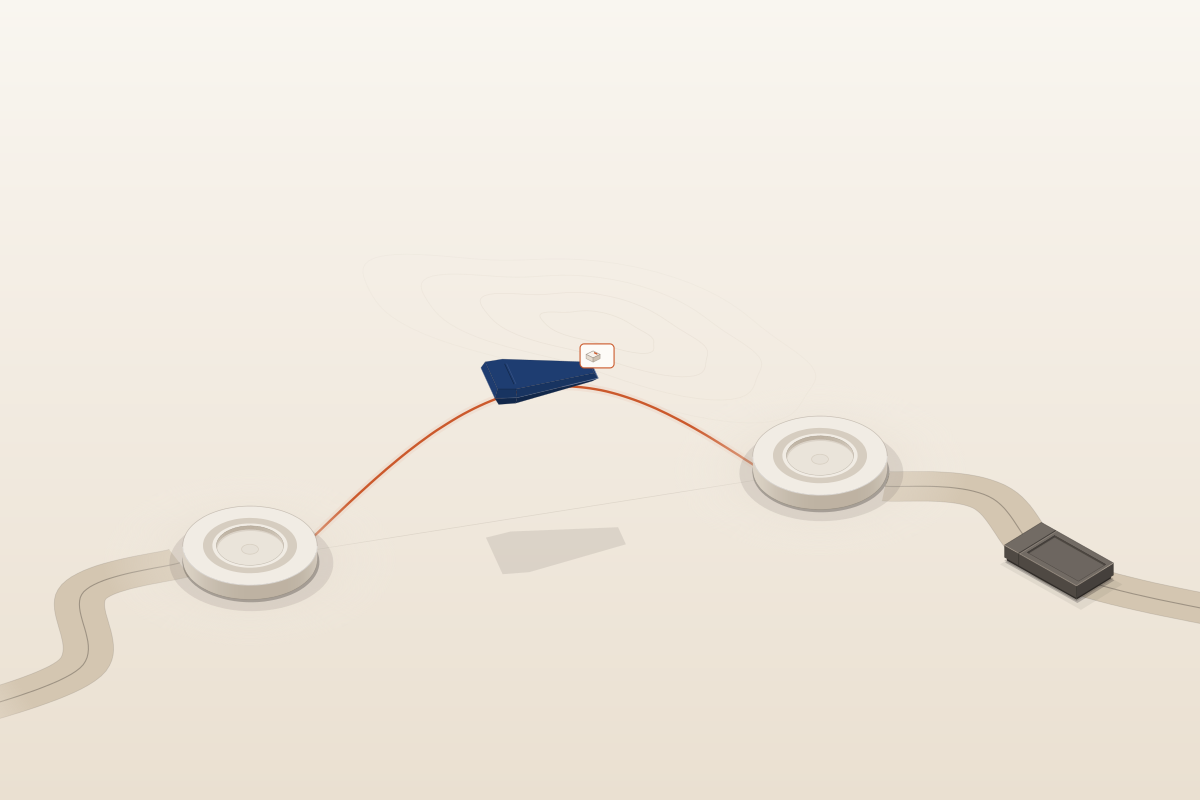
Concept illustrationRelationship among energy requirements, node operations and route planning. It does not depict specific equipment or an existing deployment.
We study energy requirements for longer-distance low-altitude logistics across aircraft, node infrastructure and route operations. The work examines how energy needs relate to transport turnaround and progressively assesses conditions for engineering applicability.
Research Stage
CurrentConcept studies and model analysis have been carried out around the energy-support needs of long-distance logistics.
Next StepValidate key engineering assumptions and assess the conditions for engineering applicability.
03Intelligent Corridor Operations
Coordinating aircraft and nodes across a corridor.
Why We Study ItAs aircraft, nodes and ground links multiply, routes planned one by one start to constrain each other, and responses to changing conditions need to be prepared in advance.
Transport PlanningDispatch NodeAircraftReceiving NodeGround ConnectionOperations DataInforms Planning
Concept illustrationConcept illustration of links among operational data, transport plans and node activities.
We research monitoring, scheduling and node coordination, considering flights and operations at both ends in one operational plan. By connecting information with transport arrangements, we explore ongoing coordination of aircraft use, takeoff and landing, and ground transfer. We also study planning methods for operational safety and the handling of non-routine situations as mission and site conditions change.
Research Stage
CurrentWe are studying a system architecture for operating information, task planning and node coordination.
Next StepMove step by step towards a software prototype and controlled-scenario testing.
Together with automated handling, ground–air integration and route coordination, these research directions contribute to the long-term concept of operable intelligent low-altitude logistics corridors.