
From node handoffs to repeated low-altitude transport operations.
We research automated handling, ground–air integration and route coordination so cargo can move more smoothly among ground vehicles, operating nodes and aircraft.
Each node handoff connects the collection of cargo before it with transport and receiving afterward. We develop these technologies around the parcel's real journey: first making the handoffs work, then making repeated trips possible to organise.
On this page4 sections
01Automated Handling
Automated handling for repeated turnaround.
- Key Problem
If receiving, loading and dispatch at a node depend on ad hoc manual work, the node cannot keep pace with successive arrivals and turnaround stays unstable.
- Work So Far
We have designed the node workflow from receipt to dispatch and an engineering scheme for the handling system; the work is at the design and analysis stage.
- Next Step
A ground-based proof of concept to test whether handoffs are stable and repeatable, and whether the process stops safely when a condition is not met.
Cargo arriving at a node must be received from one transport stage and handed on to the next. We research automation for receiving, loading and release. Because the next journey follows each transfer, we consider handling and onward turnaround together.
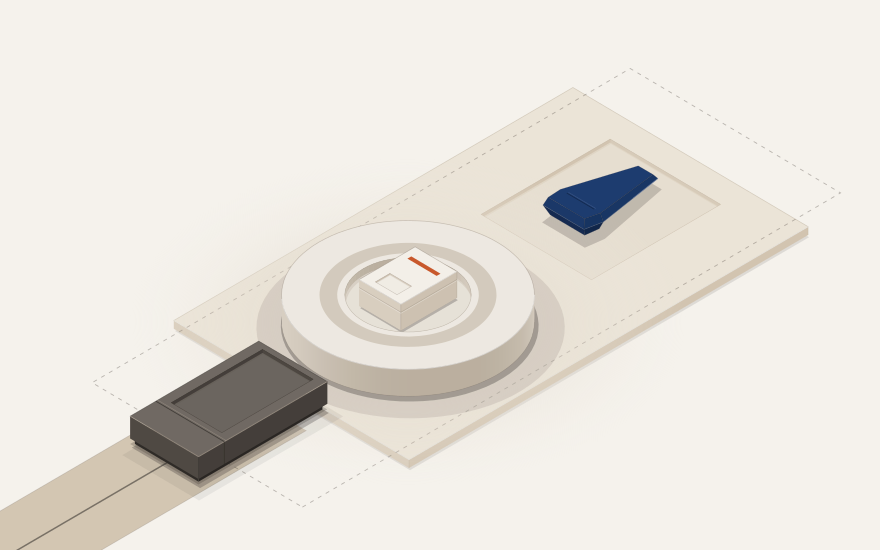
This work combines mechanics, control and operating processes. The goal is to reduce reliance on ad hoc manual coordination at each handoff and support repeated batches of cargo.
A node is more than a takeoff and landing point: it is where ground and aerial operations meet. Automation therefore needs to cover the whole turnaround, from receiving to release.
Handoff Process
One transport unit, across several transport stages.
Follow a parcel from ground arrival through node handoff to onward receiving. This illustrates functional relationships, not actual equipment or installation layouts.
03 / 06
State Confirmation
The handoff state is confirmed before the next transport stage.
Static illustration of the handoff sequence.
02Ground–Air Integration
Cargo must move between transport modes.
- Key Problem
When ground vehicles, nodes and aircraft are designed separately, cargo needs ad hoc adaptation at every step and transport cannot run continuously.
- Work So Far
We have an interface scheme for handing a transport unit between the three: shared elements form a reusable base, while each aircraft and site is adapted separately.
- Next Step
Confirm adaptation paths for specific aircraft with platform and engineering partners, and check handoff alignment and turnaround rhythm during validation.
Ground vehicles, nodes and aircraft have different roles, yet cargo must move continuously among them. We study the interfaces between equipment, the onward movement of goods and the alignment of work at both ends.
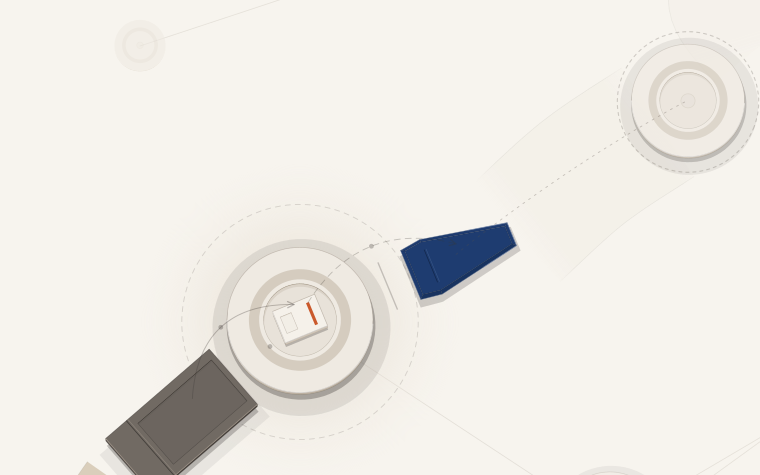
Aerial transport only becomes part of logistics when it connects to the stages around it. We therefore consider upstream sorting, node handoff and ground connections after arrival together.
Aircraft and sites differ. We aim to make common functions reusable while adapting interfaces to particular platforms and locations. Node deployment and ground support are considered together, including permanent and mobile arrangements for temporary tasks.
03Route Coordination
Organising cargo batches into a repeatable rhythm.
- Key Problem
Preparation, dispatch, receipt and delivery each keep their own rhythm; if they do not align, aerial transport stays one-off and cannot run as a repeated schedule.
- Work So Far
We have an initial operating-process framework that plans batches, schedules and node turnaround together; detailed design is still in progress.
- Next Step
Use the cargo volumes and schedules of real routes to test whether batch rhythm and node turnaround connect reliably.
Cargo preparation, dispatch, receipt and onward delivery each have their own timing. We study batch formation, trip schedules and node turnaround as a connected operation.
View full panorama
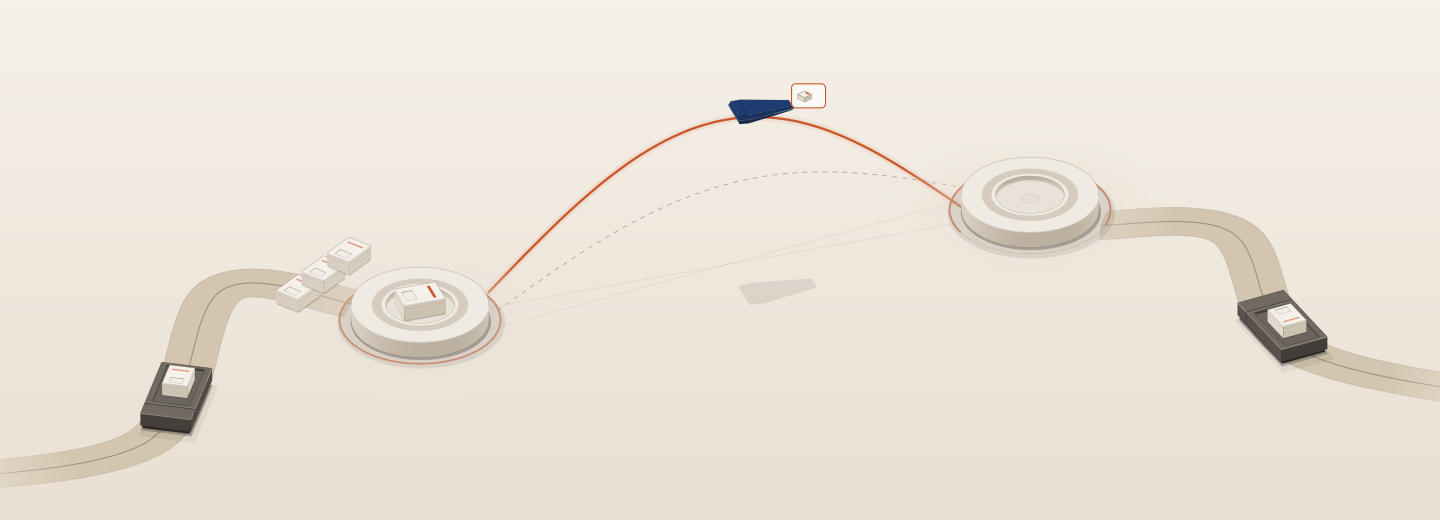
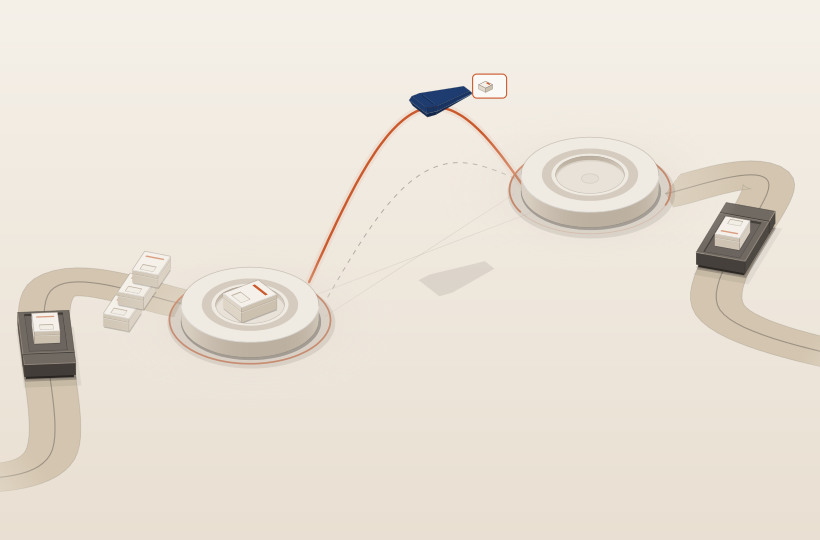
Route operations (concept): an earlier batch has returned to ground logistics, the current batch is airborne, and the next batch is forming at the node.
- 1Next Batch: Forming at Node
- 2Current Batch: Aerial Segment
- 3Aircraft Returns for Next Trip
- 4Previous Batch: On Ground
A route must account for more than one trip: it connects preceding and following batches and operations at both ends. Dispatch time, receiving node and onward delivery must align so aerial transport can become a schedulable, repeatable logistics process.
Over time, we aim to add nodes and routes as demand develops, reusing the capabilities built through ongoing research.
Systems Design
Technology must serve the entire logistics task.
Handling, transport and ground connections are not separate problems. We consider equipment, control and operating arrangements together, including routine use, maintenance and future changes.
Research begins at one node, but is not limited to one node. We work from the entire logistics task and adapt the resulting systems to real platforms, locations and operating needs.
R&D Stage
We are currently research-focused, with system architecture and engineering design work under way, alongside industry discussions and preparations for validation.
- Systems DesignIn place, under continuous review
- Industry EngagementIn progress
- Physical ValidationNext Step
- Joint ValidationDepends on earlier results
These stages are a plan, not a fixed timetable.
Go to Frontier ResearchExplore Application AreasExplore the Vision
Collaboration
Contact Ultra Mainline.
Write to us about your field and possible areas of collaboration.