
Application Areas
More ways to connect a logistics network.
Ultra Mainline Technologies researches automated handoff and ground–air integration for parcel movements between logistics nodes. We consider node handling and transport between nodes together, linking aerial transport to collection, sorting and onward delivery.
Aerial transport should serve only the part of a journey where it makes sense. Whether linking hubs and local stations, pairs of nodes or remote facilities, the problem includes how cargo enters the logistics network and continues afterward.
Explore ApplicationsExplore Related Research
These are potential application areas for our research. Illustrations do not depict transport services already in operation or existing projects.
- Hub-to-Local Network LinksCargo is consolidated at hubs and distributed to local stations; aerial transport must be planned alongside the ground links at both ends.
- Scheduled Transport Between NodesDispatch, receiving and the next movement of each cargo batch must fit into one sequence.
- Connecting Across Geographic BarriersAcross water or difficult terrain, we explore more direct aerial links between logistics operations on either side.
- Remote Facilities & Dedicated SitesExploring dedicated low-altitude corridors for remote critical sites.
On this page6 sections
01Hub-to-Local Network Links
Linking hubs and local stations, from collection to delivery.
Parcels move from hubs to local stations, while cargo at local stations also flows back into larger networks. We study how node handling, scheduled batches and ground connections could work together, adding aerial transport options on suitable hub-to-station routes.
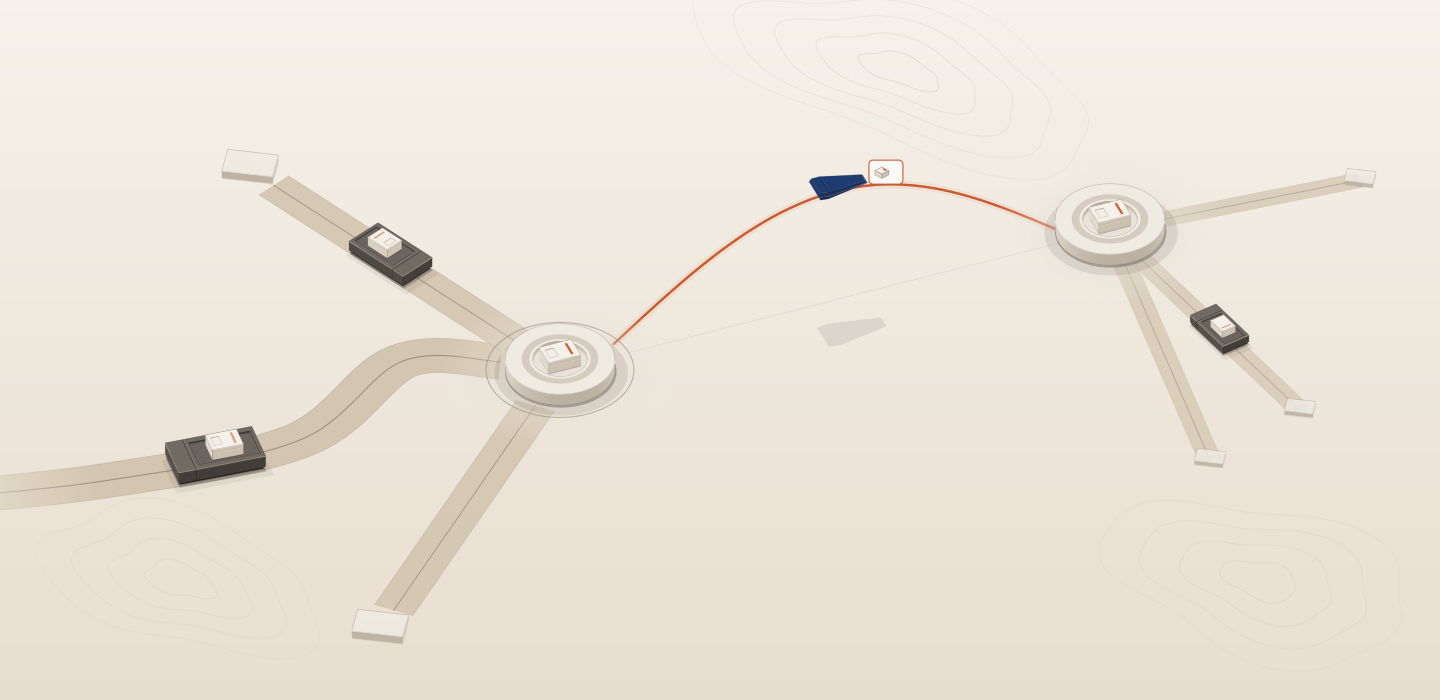
Selected logistics links between hubs and local stations, including one aerial segment and the adjacent ground connections.
- 1Upstream Cargo Arrivals
- 2Consolidation Hub
- 3Aerial Segment
- 4Local Station: Receiving
- 5Onward Ground Delivery
- 6Local Station: Ground Link
Hubs, regional nodes and local stations have different functions. Aerial transport must be planned with operations on both sides so cargo can be collected, sorted and delivered after arrival.
For example
Parcel transport between county-level consolidation points and township delivery stations is one example.
02Scheduled Transport Between Nodes
Connecting every batch with its next journey.
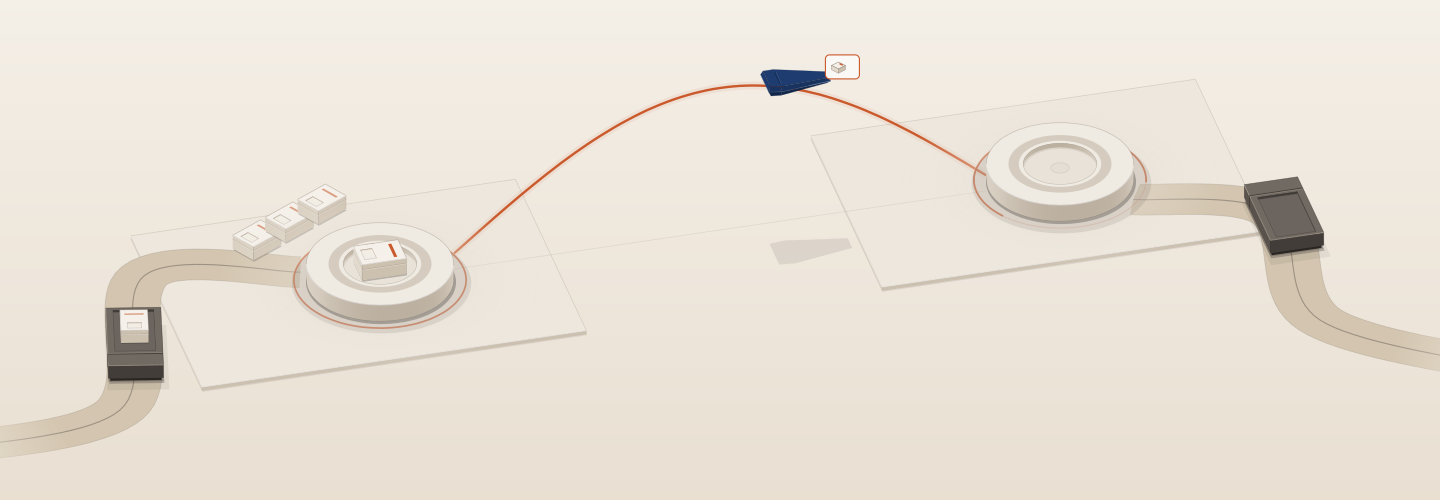
Transport between nodes must account for both dispatch timing and receiving, sorting and onward transport at arrival. We study batch scheduling, node turnaround and ground connections so flights fit the operational rhythm around them.
View full panorama
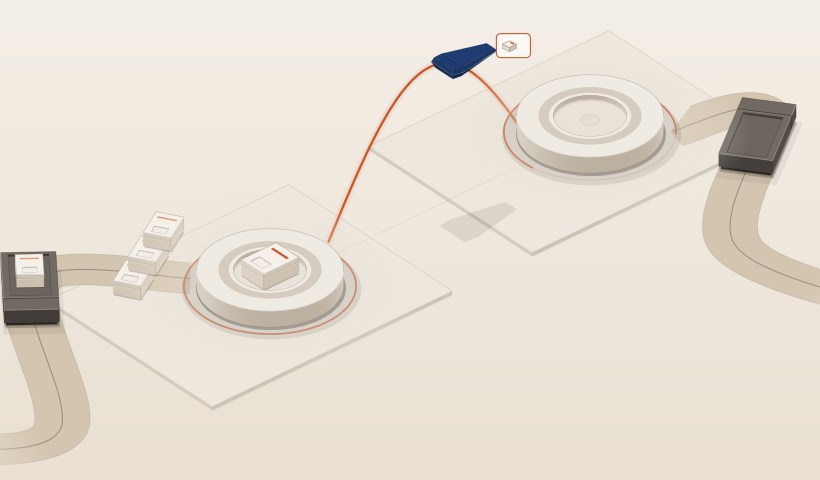
Scheduled inter-node transport (concept): the dispatch node forms a batch, the receiving node prepares in advance, and cargo proceeds to sorting and onward transport.
- 1Cargo Arrives
- 2Batch Formation
- 3Dispatch Node
- 4Receiving Node: Ready Ahead
- 5Sorting & Onward Movement
Periodic links between fixed locations are one possible application. A trip does not end on arrival: cargo must be organised for departure, the receiving node must be ready, and onward delivery must follow.
03Connecting Across Geographic Barriers
Linking logistics operations across geographic barriers.
Across water, around mountains or where ground routes are substantially constrained, aerial transport may offer more direct connections. We consider the route, collection point, receiving location and onward links together.
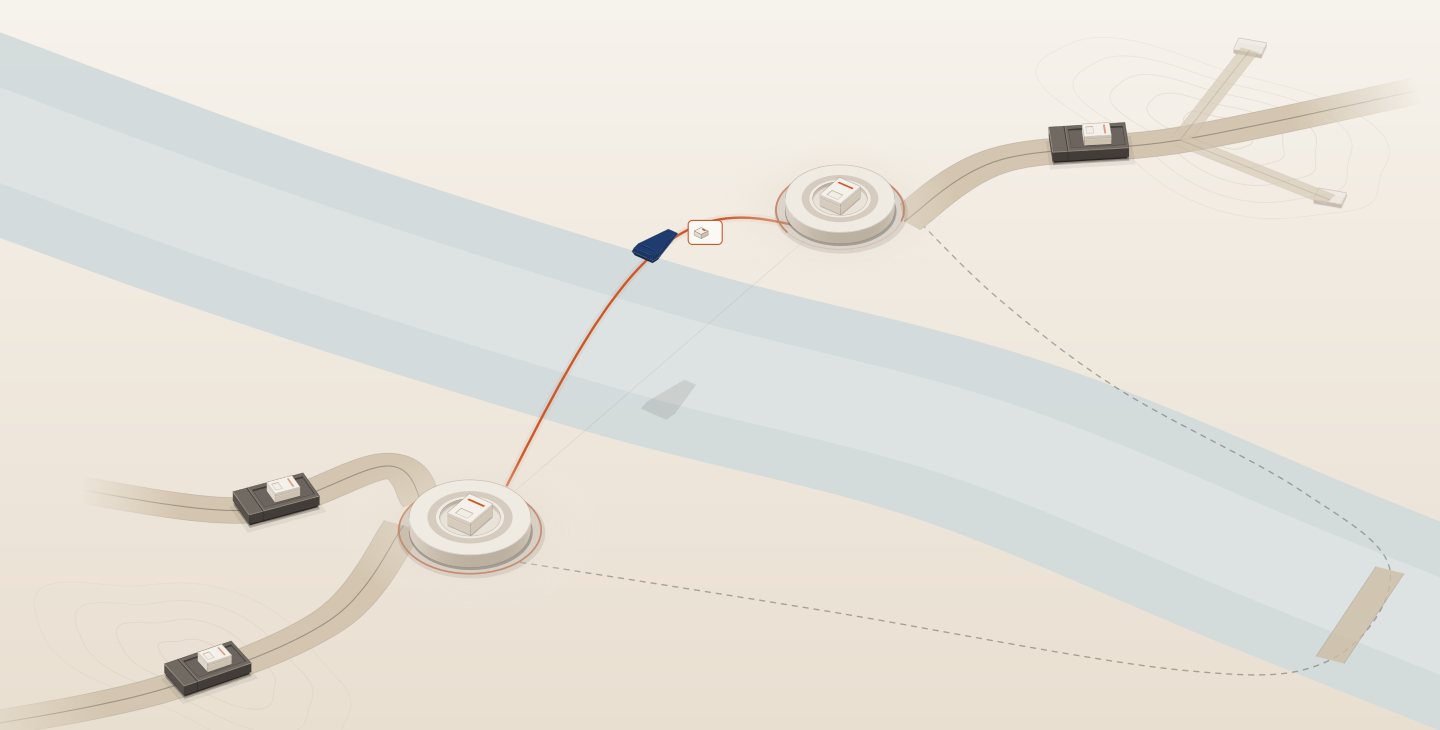
Crossing water (concept): an aerial segment links ground logistics on either side; a ground detour appears as a dashed line.
- 1Collection at Origin
- 2Origin Node
- 3Segment Across Barrier
- 4Receiving at Destination
- 5Back to Ground Transport
- 6Ground Detour (concept)
Aerial transport serves only the segment suited to it. After the barrier is crossed, parcels still need to be received, sorted and delivered, so ground operations at both ends matter.
04Remote Facilities & Dedicated Sites
Exploring dedicated low-altitude corridors for remote critical sites.
Research, production and infrastructure sites far from major transport networks may need regular or periodic supplies, spare parts, samples and material movements. Such sites often support valuable research, industrial, infrastructure or public-service activities and have recurring transport requirements. Ground routes may be long, circuitous or sensitive to local conditions. We therefore study dedicated low-altitude logistics corridors around repeatable transport tasks at remote sites.
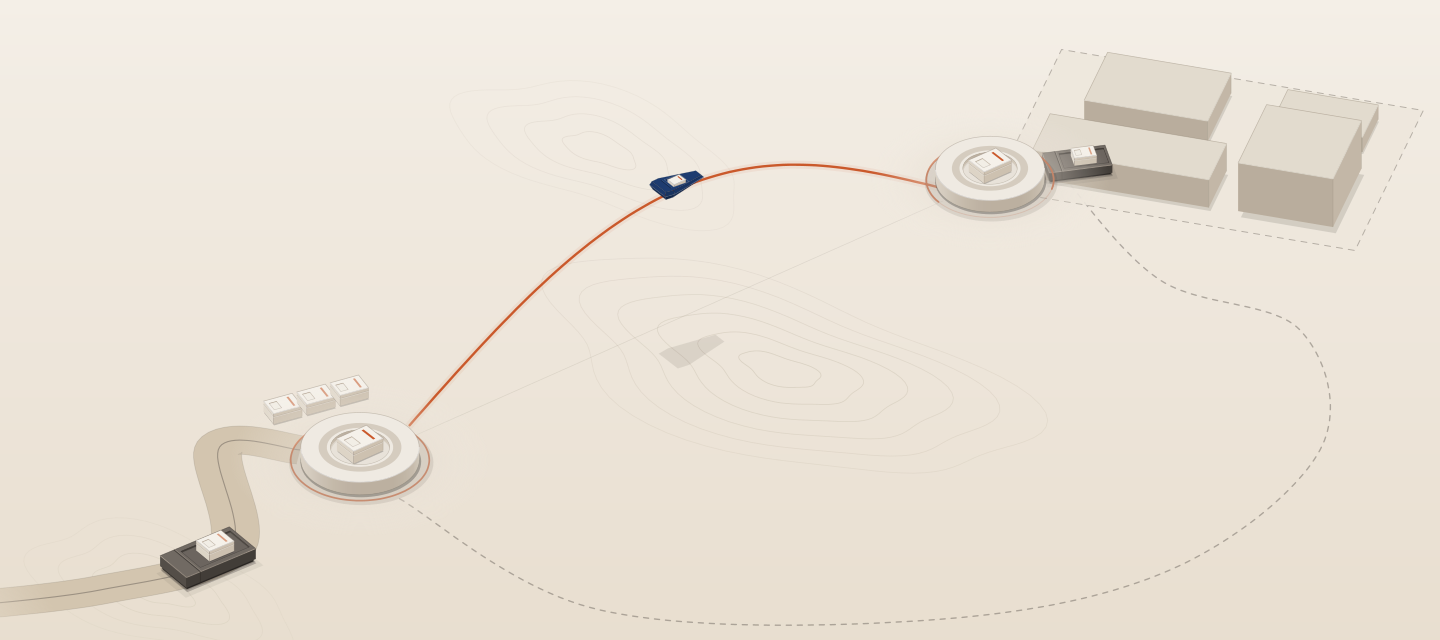
Remote-site link (concept): scheduled batches between a regional logistics node and a remote facility; the ground route is dashed. Not a real location, facility or built route.
- 1Regional Node: Batch Dispatch
- 2Dedicated Aerial Link
- 3Remote Node: Receiving & Handoff
- 4Local Site Connection
- 5Remote Critical Facilities
- 6Ground Route: Long Detour (concept)
The value is not an occasional flight but a repeatable transport connection: cargo can be dispatched in batches, received at a remote node and transferred onward by local operations.
For example
Research bases · Specialised industrial sites · Energy and computing facilities · Large commercial farms · Remote business outposts · Communities with continuing public-service or industrial supply needs
Stable long-term demand may support fixed nodes; seasonal, project-based or temporary tasks may also make use ofMobile Node Deployment, with node locations and local supporting facilities adapted to the task.
Node Deployment Options
Deploying nodes to match the transport task.
Beyond fixed facilities, we study mobile node deployment for temporary and staged tasks, allowing landing and handoff facilities to be positioned around transport needs.
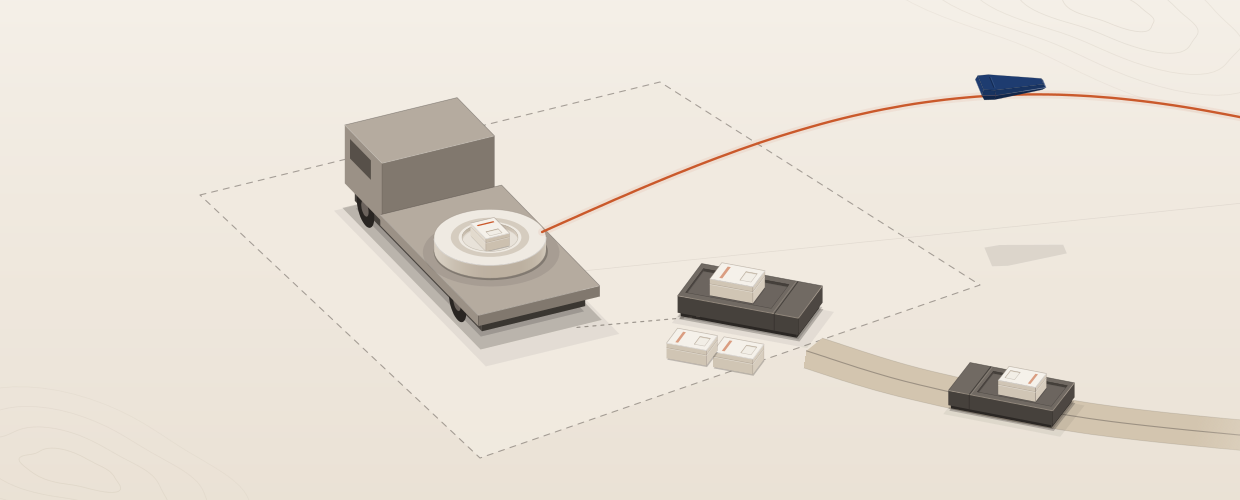
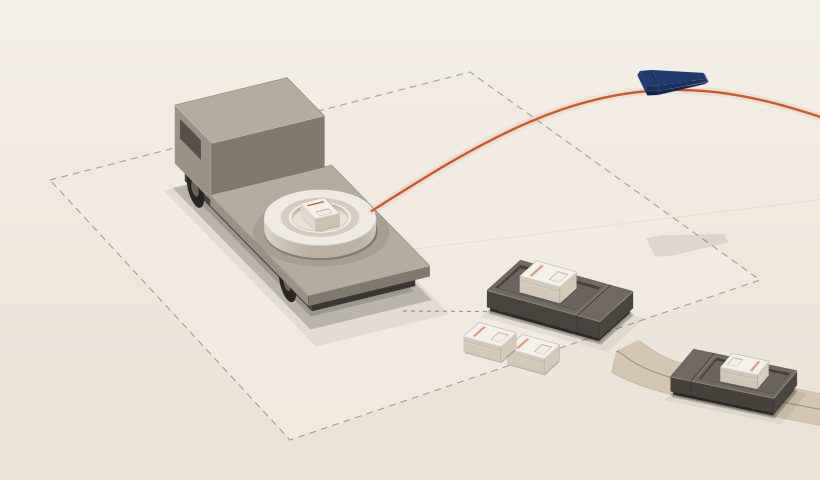
Concept of a vehicle-supported mobile deployment in which node facilities and ground support serve on-site operations.
- 1Carrier / Transfer Platform
- 2Mobile Node Facilities
- 3Ground Handling & Connections
Facility transport, on-site operations and ground handling are considered together to provide deployment options under different conditions.
Application Value
The value of a link lies in the full logistics journey.
A new transport mode must answer three questions: how cargo arrives, how it changes hands at the node, and how it continues afterward. We therefore consider routes, nodes and ground connections across the full task.
- More Connection OptionsExplore where aerial transport can link hubs, local stations and other logistics nodes.
- More Continuous OperationsDesign handling, node transfer and surrounding transport as one continuous cargo journey.
- Better-coordinated HandoffsCoordinate batches and node turnaround so new links can support repeated trips on a schedule.
Collaboration
Contact Ultra Mainline.
Write to us about your field and possible areas of collaboration.